
Stop damp in concrete and masonry.
Permanently.
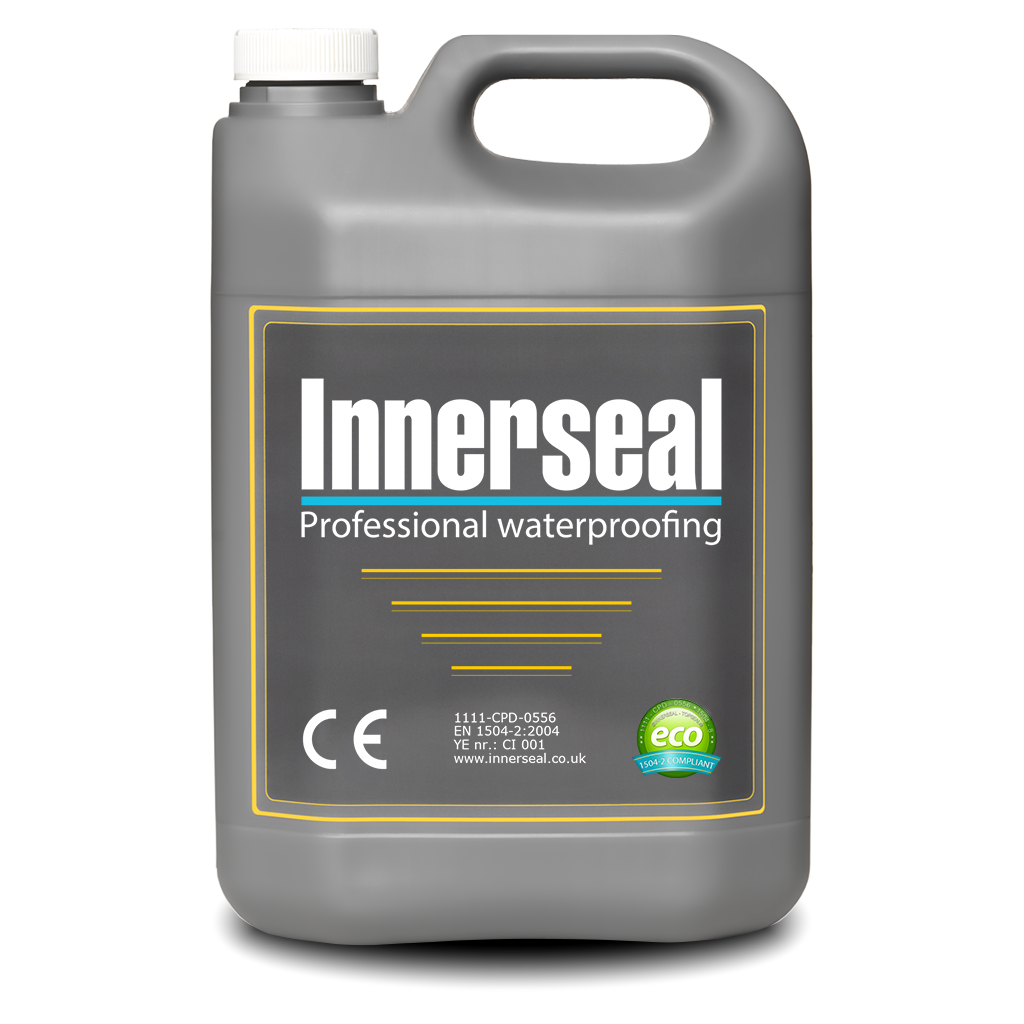
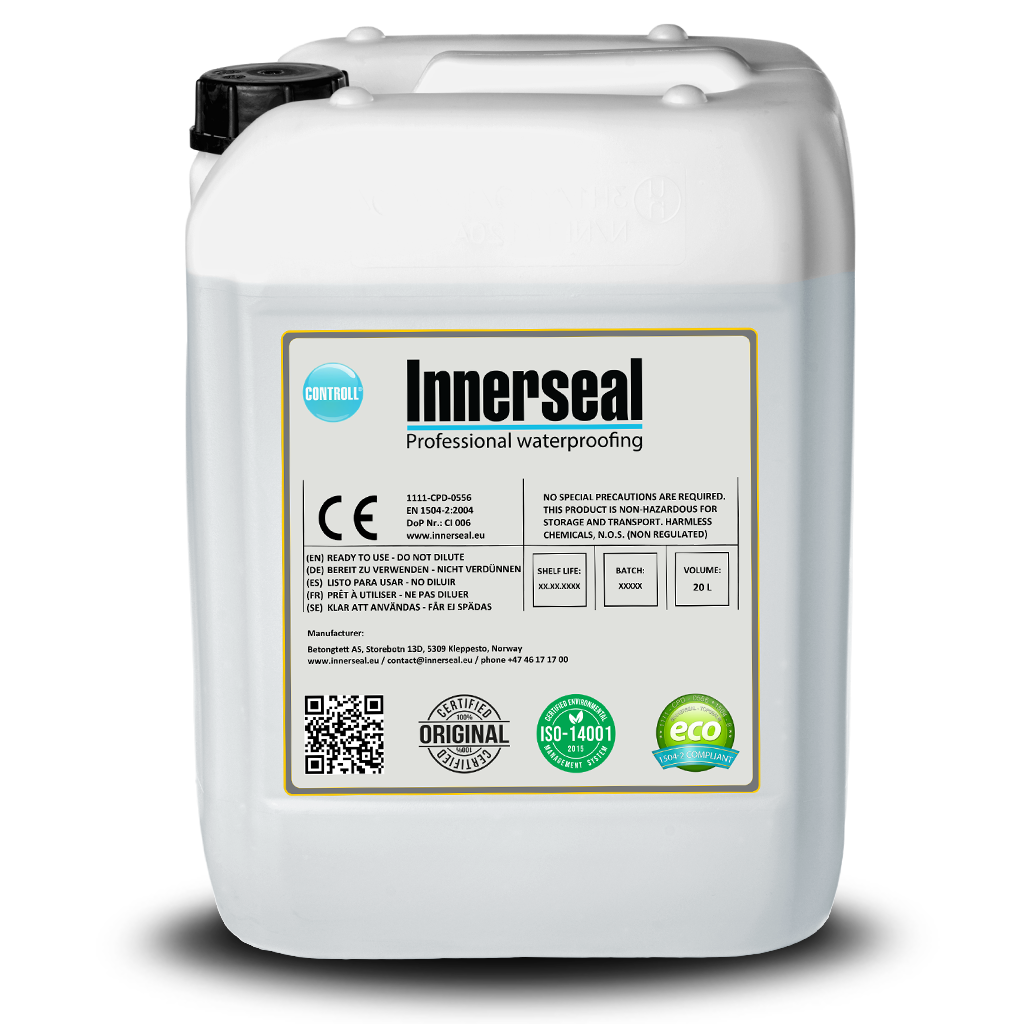
Innerseal is a deep-penetrating silicate sealer that seals concrete and brickwork from the inside out. One application. 30+ years of protection. No contractor needed.
UK launch offer: 5L £79 (normally £89) – free UK mainland delivery. First 100 orders.
INNERSEAL
If you've got damp,
you're looking for something that works.
You’ve probably already tried something — damp-proof paint that bubbled, a tanking slurry that cracked, a contractor who quoted thousands and warrantied for two years. None of it really fixes the problem because none of it gets inside the concrete.
Damp comes from inside the wall, the floor, the foundation. It comes through the pores in the concrete itself. The only way to stop it is to seal those pores. That’s what Innerseal does.
Protect your property, save money, and reduce environmental impact — all in one step.
Perfect For:
Basements · Foundations · Patios · Chimneys · Walls · Floors · Ceilings
Any indoor or outdoor cement-based surface
Price per m²/ft²
max £5.93 / £0.55
Why most damp solutions fail.
Damp paints peel. Slurries crack. Contractor injection costs thousands. Here's how Innerseal compares to every common alternative on the UK market.
| Innerseal | Damp-proof paint | Tanking slurry | Cementitious coating | Bitumen | Contractor injection | |
|---|---|---|---|---|---|---|
| Lifespan | 30+ years | 2–5 years | 5–10 years | 5–15 years | 5–10 years | 10–20 years |
| DIY-able | Yes | Yes | Difficult | Difficult | Yes | No |
| Stops damp from inside | Yes | No (surface only) | No (surface only) | No (surface only) | No (surface only) | Yes |
| Cost for 15m² | £89 | £80–150 | £200–300 | £150–250 | £100–180 | £1,500–4,000 |
| Breathable | Yes | No | No | Partial | No | Partial |
| Reapplication needed | Never | Every 2–5 yrs | Every 5–10 yrs | Every 5–15 yrs | Every 5–10 yrs | Every 10–20 yrs |
Figures based on typical UK retail pricing and manufacturer-stated lifespans. Actual results vary by substrate, application, and conditions.
Same product. Tunnels in Morocco. Your basement.
Innerseal isn’t a different formula for industrial
projects vs. homes. The product that’s waterproofing
biogas tanks in Germany and nuclear plants in Sweden
is the same one we ship to UK customers — at the
same strength, same chemistry, same 30+ year lifespan.
Independently
Certified Protection
All Innerseal products are fully certified and comply with international construction standards. In Europe, concrete protection systems must meet strict performance requirements — and our products go beyond them.
Our production is certified under NS-EN 1504-2 (System 2+), the European standard for long-term concrete protection — meaning what we claim is backed by testing, traceability, and third-party quality control.
Tested by
FAQ
Ask us anything.
Everything you might want to know before you order — and everything you might wonder after you apply it.
What is Innerseal and how does it work? +
Innerseal is a deep-penetrating, permanent sealer for concrete and other cement-based materials. Unlike surface coatings, it soaks into the concrete and reacts with free lime particles inside the pores, forming permanent crystals that block liquid water movement from within. It doesn't leave a film on the surface, so the concrete looks unchanged after treatment — just sealed permanently against water, salts, and contamination.
Is Innerseal really permanent, or do I need to reapply it? +
It's genuinely permanent. Once Innerseal has reacted inside the concrete, the crystallisation becomes part of the structure itself. There's no film to wear off, no UV degradation, and no reapplication needed. This is the main difference between Innerseal and most surface sealers on the market.
How is Innerseal different from waterproof paints, membranes, or tanking slurries? +
Most damp-proofing products work by creating a barrier on top of the concrete — a paint film, a membrane, or a cementitious tanking layer. The problem is that any film can eventually crack, peel, blister, or wear off, especially if there's pressure from moisture behind it.
Innerseal works completely differently. It penetrates into the concrete and crystallises inside the pores, becoming part of the structure itself. There's nothing on the surface to fail. It also stays vapour-open, so moisture in the concrete can still escape upward as vapour — it just can't travel as liquid water. That's why it works in situations where painted membranes often fail.
What surfaces can Innerseal be used on? +
Innerseal works on any porous, cement-based material — concrete floors, walls, slabs, mortar joints, brickwork, render, and similar. It does not work on:
- Painted or sealed surfaces (paint must be removed mechanically first)
- Glazed ceramic or porcelain tiles
- Natural stone like slate (already non-porous)
- Internal plasterwork (too soft and fine-pored)
- Solid rock or stone without lime content
For brick walls, we recommend applying in 2–3 lighter coats with rinsing in between, since brick varies a lot in lime and salt content.
Will Innerseal stop rising damp in my concrete floor? +
Yes — this is one of the most common uses for Innerseal. It penetrates into the slab and blocks the capillary pathways that moisture travels through. After treatment, the floor stays dry from below, which is why it's used in workshops, garages, basements, and ground floors of older houses without proper damp-proof membranes.
Will Innerseal stop condensation on concrete? +
It can significantly reduce it. Condensation forms when cold concrete absorbs and releases moisture at the surface. Innerseal seals the capillary pore system, which reduces moisture movement and limits how much moisture is available at the surface for condensation to form on. It remains vapour-open, so it doesn't trap moisture inside. Results depend on ventilation and insulation too, so for tricky cases feel free to email us photos at contact@innerseal.co.uk.
How much Innerseal do I need? +
As a rule of thumb, 1 litre covers about 3 m² when applied properly (total for both coats). For a 100 m² floor, you'll need around 35–40 litres. If the concrete is very porous or old, allow a bit extra to ensure full saturation. Email us at contact@innerseal.co.uk if you want help calculating for your specific project.
Does the concrete surface need to be prepared first? +
The surface needs to be clean, dry on the surface, and able to absorb water. That means:
- No paint, sealer, or coatings
- No grease, oil, or heavy dust
- No loose material
For most concrete, a good pressure wash is enough. Grinding is rarely needed. If the surface beads water rather than absorbing it, something is blocking the pores and needs to be removed first.
How do I apply Innerseal? +
For floors: Pour Innerseal directly onto the surface and spread with a soft brush or mop. Keep the concrete wet for around 1 hour, moving the liquid around where it absorbs quickly. After 1 hour, remove excess with a rubber squeegee, rinse with clean water, and let dry naturally.
For walls: Apply two generous coats wet-on-wet using a low-pressure sprayer. Apply the second coat as soon as the first begins to dry. On very absorbent surfaces, a third coat may be needed.
What about temperature — can I apply it in winter? +
Innerseal must be applied when the concrete is above +5°C and the surface is dry, with no risk of frost for at least 24 hours after application. The product is water-based and needs time to penetrate and react before freezing. Once cured, it tolerates frost and freeze-thaw cycles without issue — in fact, it protects the concrete against frost damage.
Can I paint or tile over Innerseal after treatment? +
Paint: Wait at least 14 days after application so the product has fully reacted inside the concrete, then apply a diffusion-open (breathable) paint. Avoid paint systems that require a sealed or non-porous surface, since Innerseal doesn't leave a film for them to bond to in the usual way.
Tiles and mortar: You can apply tiles or cementitious mortar after 3 days. Use standard cement-based adhesive — avoid products with sealers, polymers, or additives that could interfere with bonding.
What are those white marks I sometimes see after application? +
Those are salt efflorescence — a harmless reaction between the product and free salts or lime in the concrete. It usually happens when:
- Excess product was left to harden in puddles or low spots
- The concrete had unusually high salt or lime content
- The surface wasn't rinsed properly after the 1-hour soak
It's purely cosmetic and doesn't affect how well Innerseal works. After about 14 days the deposits dry out completely and can be brushed or rinsed off. To avoid it altogether, rinse the surface thoroughly after the 1-hour application window and squeegee off any excess.
Is Innerseal safe and tested? +
Yes. Innerseal is certified to NS-EN 1504-2 (System 2+), the European standard for long-term concrete protection. It's backed by independent testing from SINTEF (Norway), RISE/CBI (Sweden), the Technical University of Munich, TÜV Rheinland, IMASA, and the German ECO-Institut. It's certified safe for drinking water contact by the Norwegian Institute of Public Health, has top environmental ratings from Byggvarubedömningen and SundaHus, and is used in demanding environments including the Forsmark nuclear power plant in Sweden. Full documentation is available here.
How do I order, and is there support if I'm unsure? +
Innerseal is sold directly through innerseal.co.uk. Orders placed before 12pm (UK time) are dispatched the same working day via DPD, with delivery typically 1–2 working days from dispatch.
If you're unsure about quantities, suitability, or how to apply it, email contact@innerseal.co.uk — send photos if you can. Most damp issues are very common, and we've usually seen something similar before.